
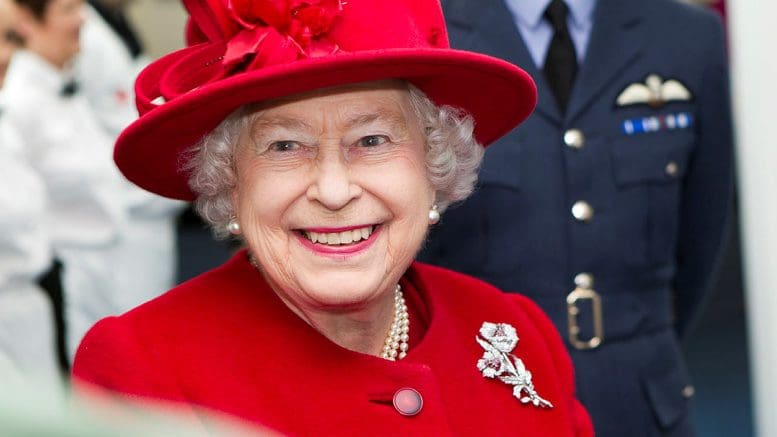
The Royal News Organisation takes a look at the life of Queen Elizabeth II on the Centenary of the Birth of Her late Majesty.
The 21st of April, 2026, would have been the one-hundredth birthday of Queen Elizabeth II, the longest-reigning monarch in British history. It was the birth of a Princess in 1926 that forever changed the course of history. There truly will never be another like her again.
Early Years
Princess Elizabeth Alexandra Mary was born on Wednesday, 21st April 1926 at Number 10 Bruton Street in London’s Mayfair neighbourhood in the home of her maternal grandparents—the Strathmores. The Princess was the daughter of the then-Duke & Duchess of York (Prince Albert & Elizabeth, née Lady Elizabeth Bowles Lyon). Albert was the second son of King George V, known as “Bertie.”
Her early life was marked by the idyllic happiness of a “normal” family life. Princess Elizabeth grew into a studious, well-disciplined, and responsible child even as a toddler. Winston Churchill, who was the Chancellor of the Exchequer at the time, remarked that the 2-year-old Princess,”(…) has an air of authority and reflectiveness astonishing in an infant.” Shortly after her birth, the Yorks moved to their permanent home in London at 145 Piccadilly.
Elizabeth, known as Lilibet by close family, was quickly joined by her younger sister, Princess Margaret Rose, whom she is said to have called a “bud” because “she’s not a full rose yet”. The two young girls, although separated by five years, were inseparable. Their parents frequently dressed the girls identically, sometimes to Elizabeth’s dismay. The Princesses also had their own china for mealtimes—Elizabeth’s was blue and white, while Margaret’s was pink and white.
Elizabeth had a scrapbook into which she stuck photographs of royal children, copying out anything she could read and tracing their lineage back to herself. She liked to get to the bottom of things and was very inquisitive. While Princess Elizabeth was famous for her love of horses at a young age, she also held a passion for gardening around this time.
The Princess had her own small garden, including sprawling flowerbeds, that surrounded the miniature house ‘Y Bwthyn Bach’ at Royal Lodge, Windsor. The small house, which was a gift from the people of Wales on her sixth birthday, was completely furnished, kitchen and all. However, nobody would expect that the two Princesses would have had a hand in its daily upkeep. They swept, brushed, scrubbed, and beat the rugs. The red and white chequered curtains adorning the windows were washed and ironed by hand, although Princess Elizabeth was often heard to complain that she did most of the work and that Princess Margaret was “dreadfully” untidy.
Year of the Three Kings
This family bliss was quickly shattered in 1936. In January, Princess Elizabeth’s grandfather, King George V, fell gravely ill. It was going to be a hard loss for the young Princess, as she was close to the King, affectionately calling him “Grandpa England.” Sadly, George V died on the 20th January at Sandringham. The nation and the Royal Family were plunged into grief. The man who led the country through the “Great War” was gone, and so was Elizabeth’s dear grandfather. Succession was automatic; the King is dead, long live the King.
The new Sovereign was Elizabeth’s uncle, Prince David, who became King Edward VIII. The King was not the best suited, by royal standards at the time, to be the monarch. He was in love with a twice-divorced American named Wallis Simpson. The problem came to a head when King Edward VIII wanted to marry Wallis and make her Queen. For over three hundred days, he went back and forth with the government of the day on proposals to make the arrangement work. One such idea was to have Edward VIII continue as King and enter into a morganatic marriage with Wallis (meaning Wallis would not share her husband’s rank). All were rejected, and it was left to Edward to choose between being King and marrying the woman he loved. He chose love over country.
All this was happening as Elizabeth’s father, Prince Albert, waited with bated breath to see how his brother would decide and what that would mean for the future of his family. On 10th December, 1936, King Edward VIII became the first Sovereign to renounce the throne in an abdication voluntarily. It was said that Albert wept into his mother, Queen Mary, ‘s arms when he learned he would now become King. At the stroke of a pen, Albert was now King-Emperor of over one-quarter of the world’s population and known as George VI—in continuity with his father, George V.
At the news of the new King’s accession, crowds began to grow outside 145 Piccadilly. The Princesses Elizabeth and Margaret watched as they shouted “God Save the King” and “Long Live the King.” Margaret asked Elizabeth what was going on, to which she replied, “Uncle David is going away, and Papa is to be King.” It must’ve really dawned on them both in that moment as Margaret replied, “Does this mean you’re going to be Queen?”
“Yes, I suppose it does,” Elizabeth replied.
Heiress-Presumptive
Following the succession of her father, Elizabeth was now referred to as the Kingdom’s ‘Heiress-presumptive’, distinguished from the ‘Heir-apparent’. This was due to the possibility that the Queen (Princess Elizabeth’s mother) could have a boy, and Britain still followed male primogeniture, meaning any princes would supersede a princess even if he were born after—a change which Elizabeth would make decades later.
The family moved from their warm and loving home in Piccadilly to the coldness of Buckingham Palace. It was not the place which they found particularly pleasing, but the Princesses enjoyed the gardens of the Palace. Both Elizabeth and Margaret attended the coronation of their father and mother at Westminster Abbey in May 1937. Elizabeth wore a fine silk, satin, and cotton Chantilly dress made by Smith & Co., who were also responsible for her sister Princess Margaret’s identical dress. It was the first long formal dress Elizabeth had worn in her life. It was “arguably the most important piece of clothing worn in her childhood, marking the moment at which she became heir presumptive to the throne, on an occasion of great national significance.” The dress complied with the official requirements for a coronation dress, being a combination of white, cream and gold colours, completed with a miniature silk velvet, ermine-trimmed robe made by the royal robe-makers, Ede & Ravenscroft. The Princesses’ silver-gilt coronets were made by the Crown Jeweller, Garrard & Co., costing £29 each.
The King and Queen immediately began undertaking many duties at home, cementing their roles as the nation’s figureheads. This time of stability and foundation-building was to be short-lived, as war was on the way, and many knew it, too.
World War II
World War II began, and nazi Germany invaded Europe. There was growing fear not only in the capital but throughout the country. The bombing raids started, and there was true fear that the enemy could land on British soil at any moment. Almost three million schoolchildren were being evacuated from big cities to the countryside for safety. At Buckingham Palace, it was thought the Princesses should be sent overseas to Canada for their safety. When this proposal was brought to the Queen, she had an immediate reply, “The children won’t leave without me, I won’t leave the King, and the King will never leave.” It was decided that they should be secretly moved to Windsor Castle for a few days. Princess Margaret later remarked that they packed for five days and stayed for five years.
Their time at Windsor was marked by the constant air raid sirens blaring, sending the castle occupants into their shelters. Large fences were put up around the perimeter of the castle. Inside, however, the Princess made the best of the doom and gloom of the castle’s interior that had been stripped bare of anything of value. Christmas pantomimes were performed at Windsor between 1941 and 1944, the first being Cinderella, in which both Princesses had leading roles.
The pantomimes were staged in the Waterloo Chamber and were both written and produced by the Headmaster of the Royal School, Hubert Tannar, in Windsor Great Park. The performers included local children—some evacuees—and friends of the Princesses. There was always an enthusiastic audience, with all funds raised from admission charges going to the Wool Fund to supply knitting wool for the making of comforters for the armed forces.
Princess Auto-Mechanic
Elizabeth felt compelled to do her bit in the war effort and later joined the Auxiliary Territorial Service (ATS). Second Subaltern Elizabeth Windsor (No. 230873) trained as a driver and mechanic at ATS No. 1 Mechanical Transport Training Centre in Camberley. She was later promoted to Junior Commander, equivalent to a Captain.
The Princess became the first female Member of the British Royal Family to join the Armed Forces full-time. She had occasional visits from her parents, the King and Queen, who saw the Princess working on the various trucks and ambulances.
When Elizabeth was 19, VE Day was celebrated with rapturous crowds filling the area around the Queen Victoria Memorial. Princess Elizabeth appeared on the balcony, in her ATS uniform, alongside her parents, the King and Queen, Princess Margaret and Prime Minister Winston Churchill. After seeing the crowds and the apparent elation, Elizabeth and Margaret asked their parents to join the throngs outside. Following some pushback, the King and Queen reluctantly allowed their daughters to escape, for one night, incognito, into the crowds.
In her own words, Princess Elizabeth remarked that, “It was one of the most memorable nights of life.”
‘I remember lines of unknown people linking arms and walking down Whitehall, all of us just swept along on a tide of happiness and relief.’
The Queen was 19 years old on VE Day. More than thirty years later, she recorded her memories for a unique BBC Broadcast. #VEDay75 pic.twitter.com/jWf4bebj2e
— The Royal Family (@RoyalFamily) May 8, 2020
Marriage
Princess Elizabeth married Lieutenant Philip Mountbatten, Royal Navy, a Prince of Greece and Denmark and a descendant of Queen Victoria. The couple first met in 1939, when King George VI and Queen Elizabeth brought their daughters on a tour of Dartmouth Naval College, only seven weeks before the start of WWII. While at the College, Philip was assigned to escort the Princesses and show them around. Elizabeth and Philip were smitten with each other and continued to correspond by letters over the years.
The couple were secretly engaged in the summer of 1946 but were told to hold off on an announcement for a year while the Royal Family toured South Africa, allowing for some time alone following their separation during the war. The engagement was announced in July 1947. On 20 November, Princess Elizabeth married Philip, the Duke of Edinburgh, at Westminster Abbey, an event which was attended by the British Aristocracy and European Royalty. Elizabeth became the new Duchess of Edinburgh at the age of 21.
The Duchess of Edinburgh gave birth to Prince Charles in 1948 at the age of 22 and Princess Anne in 1950 at 24. While she faced mounting duties and the added pressures of being a Member of the Royal Family, Princess Elizabeth tried to devote as much time as possible to her children.
It was around this time that Philip was stationed in Malta as an officer in the Royal Navy. Elizabeth accompanied him there. As the wife of a naval officer—a period during which she was able to handle most daily tasks herself, from grocery shopping to visiting the hairdresser and running errands—this proved to be one of the most liberating times in the young Princess’s life. The Duke and Duchess lived at Villa Guardamangia for months at a time. Currently, the Villa is undergoing extensive restoration; the once-dilapidated building is being transformed into a museum designed to preserve the memory of the happy period the couple spent there.
Sadly, those peaceful days did not last long. This was due to Elizabeth’s father, George VI, suffering from lung cancer—a fact of which no one in the family was aware. In 1951, the Princess and Philip soon returned home and took on an even greater share of official duties on the King’s behalf. That summer, Princess Elizabeth even undertook the role of receiving the Salute at the Trooping the Colour ceremony.
Accession
The Princess and Philip were tasked with undertaking a Commonwealth tour on the King’s behalf. The ill King waved his daughter off at London Airport in January 1952. It would be the last time the two saw one another.
On the way to Australia, the royal party made a stop in Kenya. It was there that life changed for everyone. The Princess and Philip arrived at Sagana Lodge, which was an earlier gift to the couple. On the night of 5th February, the couple were around 40 kilometres away at Treetops. True to its name, it is housed within a massive treehouse that has been converted into guest accommodations. Princess Elizabeth brought along her favourite cine camera and captured on film those final moments that could truly be called “normalcy.”
On the 6th February, 1952, King George VI passed away in his sleep at the age of 56. As news began to spread, word was urgently conveyed to the new monarch. It is said that it was Prince Philip who delivered the news to the new sovereign—a woman whose world had been irrevocably transformed by the death of her father.
At that moment, the question arose as to what name the new Queen would assume upon her accession. This is because, by tradition, a new monarch is free to choose a “regnal name” at the time of their accession. The Queen replied, “My own—of course.” Thus, Princess Elizabeth (the Duchess of Edinburgh)—who at that very instant was destined to etch her name into history—ascended the throne as Elizabeth II. Though strictly speaking, she had already become Queen the very moment her father passed away.
There was an obvious rush to get back to London, as many, many procedures, protocols, and ceremonies needed to take place, some of which required the Sovereign’s presence. At the then-London Airport, the Queen was met by the Prime Minister, Winston Churchill, the Duke of Gloucester, as well as the Earl and Countess Mountbatten of Burma.
Coronation
Following her accession to the throne, the Queen needed time to mourn the sudden passing of her father. This was, of course, entirely natural; yet it also served as a period to prepare for the solemn ceremony, deeply rooted in history and tradition, that was to come. A date was set for the summer of the following year.
Anticipation mounted steadily as people from across the globe flocked to London. The guest list—totalling over 8,250 guests—included members of Royal Families worldwide, presidents and prime ministers from various nations, and representatives from more than 129 countries.
The Queen wanted no fuss on the morning of Coronation Day and is believed to have done her own makeup for the service. The ride to Westminster Abbey was over a mile long with Her Majesty adorning the George IV State Diadem. Upon arrival at the Abbey and as the fanfare sounded, Queen Elizabeth II stepped into the historic space that had been the setting of every coronation since—she was the 39th Sovereign to be crowned there. Lady Glenconner (then-Lady Anne Coke) later remarked that The Queen turned to her Maids of Honour & said, “Ready, girls?”
The historic service saw Elizabeth crowned with the gold St. Edward’s Crown, then donning the Imperial State Crown for departure. The Queen had the latter’s height shortened, giving it a more “feminine” look. The route back to the Palace was over five miles and lined by around 16,000 service members. The Queen then appeared on the balcony of Buckingham Palace just as Kings and Queens had done in past generations (the balcony was only built during the Reign of Queen Victoria). Already a year into her reign, she was 27 years old at the time.
Steadying The Boat
The Queen was steadily growing into her role as Sovereign. There was much to learn as she was thrust into the position at such a young age. The family had to move from their home of Clarence House to Buckingham Palace, which must’ve evoked memories of 1936.
One of the first major events was the Commonwealth Tour, which she first embarked on as Princess, now as Queen. Following the success of the tour, she undertook dozens of state visits and tours, including extensive journeys through Australia, New Zealand, Canada, India, and newly independent African nations, helping to navigate the era of decolonisation and modernise the institution’s global image.
Domestically, she maintained the constitutional role with her weekly audiences of prime ministers from Winston Churchill through to James Callaghan, while raising her growing family. Winston Churchill had resigned during the 50s and, after his death, received a full state funeral. She steadily provided a sense of stability to Britain and its realms, laying the foundations for her long reign’s reputation of duty and service.
Princess Anne married Captain Mark Phillips in 1973, who was the first of Elizabeth’s and Philip’s children to marry.
By 1977, as she marked 25 years on the throne, the Queen celebrated her Silver Jubilee with the nation. Street parties and services of thanksgiving were held, and it was Her Majesty who famously started the walkabouts that became so iconic in her reign.
Leadership
As Queen Elizabeth continued to reign over the vast Commonwealth of nations, family troubles arose which inevitably changed the course of history. In the early 80s, Prince Charles—who had already gone through his own Investiture as Prince of Wales—married Lady Diana Spencer. The couple had two children. This was quickly followed by the marriage of the Queen’s second son to the daughter of Major Ronald Ferguson.
The three marriages of the Queen’s elder children did not last, and they all broke down in 1992. The year is described by the Queen herself as her “annus horribilis” (Latin for “horrible year”). As the marital breakdowns brought the image of the Royal Family into disrepute, there was one event at the end of the year which would scar the Queen to her core.
Culminating in November, in a true metaphor of how that year went, she watched as her house burned down. The Windsor Castle Fire of 1992 ravaged 115 rooms—including nine State Rooms—and lasted 15 hours (from 11:30 am to 2:30 am the next morning). The fire completely collapsed the ceiling of St. George’s Hall. It is believed to have started with a spotlight left too close to a curtain next to the altar in Queen Victoria’s Private Chapel, causing it to spread within minutes throughout the historic walls. Many of the staff and members of the public ran into the burning castle to save the priceless works of art, artefacts, and furniture, forming a line of people in the process. Some of Britain’s finest were laid out in the Quadrangle, escaping the flames and smoke. Amazingly, only two works of art were lost in the fire — a rosewood sideboard and a very large painting by Sir William Beechey that couldn’t be taken down from the wall in time. Luckily, works of art had already been removed from many rooms in advance of rewiring work.
Following the fire and mounting repair bill, the Restoration Committee was established, tasked with the reconstruction. Prince Philip, Duke of Edinburgh, was the Chair. The castle was reopened on the fifth anniversary of the fire and the golden wedding anniversary of Queen Elizabeth II and Prince Philip.
The late 90s also saw the unfortunate death of Diana, Princess of Wales. The mother of the young Princes William and Harry was killed following a paparazzi chase into a Paris tunnel; it was later discovered that her driver was intoxicated. The Queen followed the same protocol she had always followed. Never complain, never explain. She also had to care for her grandchildren at that moment, who themselves had just lost their mother. The backlash for not coming immediately to London was visceral; people demanded to see their Queen. Her Majesty eventually came to London, and in that moment, the mounting “hate” subsided.
In a more fitting close to the decade, the youngest of the Queen’s children, Prince Edward, married Sophie Rhys-Jones at Windsor Castle in June 1999.
New Millennium
The new century offered many in the Royal Family, not least the Queen, the opportunity to look ahead. However, shortly into the new decade, Her Majesty suffered two successive losses that changed her forever.
Princess Margaret was suffering from a lifetime of chain-smoking and drinking, resulting in numerous strokes. The Queen was pained to see her sister fail and become ill. The Princess died in February 2002 at King Edward VII Hospital in London. Her funeral was held on the same day as her father’s was 50 years earlier. The Queen Mother was not at all well either, as she was already over one hundred years old herself.
After a short illness, the Queen Mother died in April of 2002, leaving the Queen devastated. Though the Queen had inner strength of steel, the loss of her mother and sister greatly affected her.
The Queen passed through the late 2000s with grace, though not without its troubles. While 2005 was celebrated for the marriage of the Prince of Wales to Mrs Camilla Parker Bowles and for winning the bid for the 2012 Olympics, it was also marked by tragedy in the London Bombings. Those moments of anguish and uncertainty there caked for one person to whom the country, and the world, could turn to for stability and reassurance—The Queen.
This period was also encapsulated by the wedding of Prince William with Catherine Middleton, the Queen’s iconic jump from a helicopter into the Olympic Stadium, and the change from male-only primogeniture to absolute, meaning that any future royal children in the line of succession would follow birth order as opposed to a boy superseding a girl. This change was made in relation to the birth of Prince George.
Her Majesty also continued to gain admiration abroad. By this point in her life, as she approached becoming the longest-reigning monarch, she was simply known as “The Queen”. She was famous for her bright colours, white gloves and black handbag, which became her iconic signature look. Her stance on the clothes? They came with the job. Her motto, “I have to be seen to be believed”, translated into her daily wardrobe.
On 9 September, 2015 Queen Elizabeth II became the longest-reigning monarch in British history—a milestone she herself remarked she never aspired. This historic achievement was made possible precisely because she ascended to the throne at the age of just 25 on the back of her father’s premature death. She withstood the test of time, remaining a guiding light for many around the world. This was a period that could be described as yet another pinnacle in her life. After all, the public’s high regard for her virtually never wavered. However, as she entered her 90th year (Prince Philip approaching 95), it was almost certainly time to reflect on the busy life she had always led.
That year also saw The Queen undertake her final overseas visit to Malta for CHOGM (Commonwealth Heads of Government Meeting). Time was creeping up, though, her stamina, energy, vigour & humour remained incredibly strong for an 89-year-old.
More family troubles ensued with the departure of the Duke and Duchess of Sussex and Prince Andrew’s misconduct.
Our Platinum Queen
In 2022, Her Majesty reached the milestone of 70 years of her accession. This was a historic achievement in many ways—one that no monarch in British history had ever reached. The reign of Queen Elizabeth II can almost certainly be characterised by the sense of stability she provided. Amid the pandemic in 2020, the figure to whom people turned for solace was none other than Her Majesty herself. The situation had reached a critical point—one grave enough to warrant a special address to the nation. From Windsor Castle, just as she had done 82 years earlier, when she was 14 years old, Her Majesty spoke to her people, offering reassurance that things would take a turn for the better, and that we would, indeed, “meet again.”
Following the pandemic, The Queen suffered the most painful loss of her reign: the loss of her “strength and stay”, Prince Philip. The Duke of Edinburgh had been ill for a while, with Her Majesty deeply worried throughout the entire period and various episodes. Sadly, the Queen was not at his side the moment he died on 9 April 2021 at Windsor. It has since emerged that The Queen was upset the Duke had left, as he so often did in life, without saying goodbye.
The Queen carried on with duties as much as possible. By this point, her body was catching up to her age. Although she was as competent as ever, she needed a stick to walk and started to slow her usual daily engagements—she had already given up overseas travel in 2015.
In the summer of 2022, having privately marked the 70th anniversary of her accession in February, Her Majesty received congratulations from the nation and the world through several days of celebrations & commemorations. After the pandemic, the Platinum Party at the Palace offered everyone across the country an opportunity to gather once again and pay tribute to Her Majesty.
On this occasion, Her Majesty appeared on the balcony of Buckingham Palace for what would be her final appearance. The Queen’s health gradually declined over that summer.
The Queen carried out her final engagement on the 6th September 2022, asking Liz Truss to become her 15th prime minister. Her Majesty had bruising on her hands and terrible leg pain, but, as ever, remained determined to carry out the task she was anointed to do.
Queen Elizabeth II died on Thursday, 8th September 2022, at Balmoral Castle at the age of 96. She had reigned for 70 years and 214 days. Today, we remember the life and legacy of Britain’s longest-reigning monarch.



Be the first to comment on "Remembering Queen Elizabeth II"