
25 years ago, the world witnessed one of the worst mass killings of any dynasty during the Nepalese Royal Massacre. What happened? Why did someone attack their own family? And why was the assailant then declared King?
The Nepalese royal family can be traced back to the late 1760s. The family begins with the unification of the country from surrounding regions through territorial consolidation. The first Nepalese King — Prithvi Narayan Shah — while dying at only 52, ensured that the new Kingdom of Nepal would have the strength and unity to withstand foreign invaders rising around the world at that time.
Over about 230 years, the Kingdom grew into the mountainous country that has captivated the world with its beautiful landscapes and religious sites, both Hindu and Buddhist. With that growth, the royal family and its role in Nepalese life grew as well, which wasn’t always good.
Inwasn’t001, the sovereign at the time was King Birendra with his wife Queen Aishwarya. Together they had three children: Crown Prince Dipendra, Princess Shruti and Prince Nirajan. The King acceded to the throne following his father’s death in 1972. His Majesty’s reign, though troubled throughout, saw the country become a constitutional monarchy after he inherited an absolute monarchy that outlawed political parties.
His eldest son, the Crown Prince, was educated at Eton and attended Sandhurst. The heir was widely popular in Nepal, with citizens calling Dipendra “Dippy”, and he attended various sports events at home and abroad. The Nepalese royal family was seen as almost god-like figures, so favourability was almost innate to people. What they didn’t know was the double life he had led. The Prince would frequently get overly drunk and was known for smoking hashish (cannabis). He was believed to have used these substances to heal wounds from a neglected childhood where his parents. He was also thought to hold anti-democratic ideals, which stemmed from his father’s decision to make the country a constitutional monarchy, as he believed it gave away too much sovereign authority.
The Crown Prince met Devyani Rana while in England and completely fell in love. Rana was from a prominent political family that descended from a Maharajah. It was because of their two families that the couple were forced to see each other in private for years. On the Crown Prince’s side, his mother, Queen APrince’s, deeply discouraged the match and wanted her son to marry someone of their own distant relatives in the House of Shah. For Devyani, her family was very wealthy and wanted more for their daughters than someone who came from a “poor house.” While the Nepalese rulers were Kings and Queens, Princes and Princesses, with royal palaces, they were not in any way comparable to those of Great Britain, Denmark, or Japan, all of which are among the oldest in the world. Devyani’s family described her upbDevyani’ss “accustomed to extreme comfort and”wealth.”
Due to those factors, the two were never granted permission by both sides to wed. The issue of Dipendra and Devyani was brought up again, this time, however, he stated he was willing to give up his title and role for the woman he loved, but Devyani wanted to be Queen.
Things began to reach a breaking point in the spring of 2001. At the age of 29, with the Crown Prince still unmarried, the Nepalese began to grow weary of waiting to see their heir wed and produce the next generation of royals. He now felt the intense pressure both from within and outside his home.
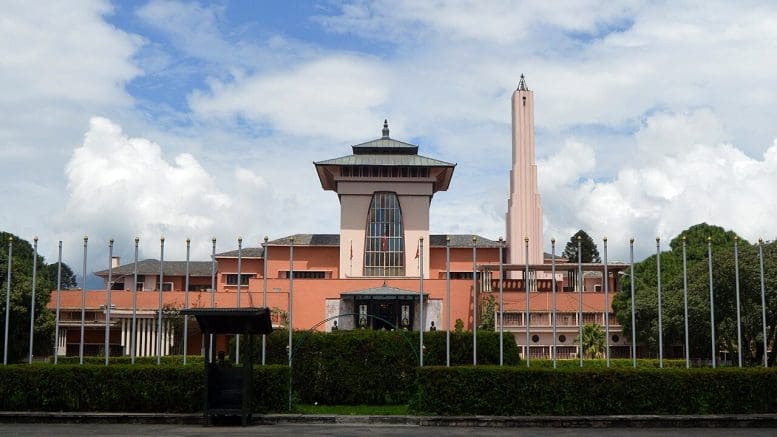
During the reign of King Birendra, the Royal Family gathered twice a month, mostly on Fridays, to spend time together. On the evening of 1 June, 2001, the greatest threat to face the Royal Family would come from within its own walls. The Crown Prince got drunk and high off a mixture of cannabis and an “unnamed black substance” and went to the dinner party, which was being held at Narayanhiti Palace. He was known for holding his drink well and not getting into a mess too fast. This night, however, it started to turn differently. He lit a cannabis cigarette in the room, surrounded by the rest of his family, which was completely unacceptable even in adulthood. Once he started fighting with another guest, his brother and cousins took Dipendra back to his room, stumbling along the way.
Another version says that the Crown Prince argued with his parents at the party and was sent back to his room.
Once back in his room, the Prince called Devyani and was completely incoherent, but said he was going to bed. Dipendra then dressed himself in his army camouflage and gathered many of the firearms that he had collected. He had a passion for guns since he was as young as eight. He walked back to the billiard room where the party was being hosted. Along the way, staff saw the Prince but did not think it was unusual, as he would often practice at night.
Crown Prince Dipendra entered the room and shot his father, King Birendra. He left and returned with an M16 automatic rifle. The Crown Prince then, allegedly, turned the gun on his own relatives who were gathered for the evening. After killing several royals, he went out in search of his mother, Queen Aishwarya.
In the palace garden, the Crown Prince ran into his mother, accompanied by his younger brother, Prince Nirajan. In an attempt to save his mother, the younger brother Nirajan shielded his mother and said, “Don’t do it, please. Kill me if y”Don’tt.” He shot and killed them both.
Af”er killing nine members of the Nepalese royal family, including his parents, the King and Queen, as well as his own siblings, Dipendra’s uncle stepped forward and demanded that he hand over the gun. Dipendra shot and left him injured.
Concluding the violence, Dipendra is said to have turned the gun on himself in an attempted suicide. He was not successful and lived. Those who survived, including the Crown Prince, were taken to the hospital. Dipendra was left in a coma from the shooting and lay unresponsive in a hospital bed.
It was described as an “accidental firing” at the time, with the country plunged into grief and despair. Under succession laws, Dipendra became the next King of Nepal. He was declared King, since the new King was incapacitated, it was left to his uncle, Prince Gyanendra, to become regent. After a few days in a coma, King Dipendra died on 4 June, 2001, adding to the mystery of the entire situation.
Following the massacre, conspiracies ran rampant in Nepal and around the world. Palace communications were completely stopped. Some saw the mass killing as an act of political violence to see the accession of Dipendra’s uncle, who was notably absent from the dinner party being held that fateful night. One minister had claimed, without any evidence present, that the U.S. and India were behind the plot. Some also believe it was simply a prophecy that would inevitably doom the House of Shah after ten generations — Dipendra’s father, King Birendra, was the dynasty’s 11th monarch.
Whatever the true reason behind the killing, though it remained unknown, had consequences for the royals and the country altogether. The Nepalese royal family was abolished in 2008 following a government vote to end the monarchy after 240 years of ruling.
Today, there is a resurgence of support for reinstating the royal family. The former King Gyanendra still garners wide admiration in the mountainous country, which is now a federal parliamentary republic. Thousands came out in 2021 to show their solidarity with the former monarch, calling for an end to the republic. Political instability and corruption have led those living in Nepal to support a conditional monarchy once again.
In 2024, King Gyanendra travelled to Bhutan and was received, almost as a Head of State himself. While the trip was described as “private”, it gained much attention for the high honours he received. His trip included a meeting with King Jigme Khesar Namgyel Wangchuck, and he was met at the airport by Princess Pem Lhaden Wangchuck.
It remains to be seen what will happen with the Nepalese royal family in the years to come.


Be the first to comment on "Marking 25 years since the Nepalese royal massacre"