

Today marks the fourth anniversary of Queen Elizabeth II’s death. We look back at that Thursday and how events unfolded.
The year was 2022, and it was by all means one of the most meaningful years of Queen Elizabeth II’s life. She was celebrating her Platinum Jubilee, marking seventy incredible years on the throne. The celebrations united the public at street parties up and down the country or at the various concerts held in her honour. If you were extra lucky, you were invited to the Platinum Party at the Palace and had a chance to see the Queen appear on the balcony, for what would be her last time.
Unbeknownst to everyone, including many in her own family, the Queen was suffering from bone marrow cancer — this is according to Gyles Brandreth in a biography titled ‘Elizabeth: An Intimate Portrait‘. Queen Elizabeth had cut her official schedule of engagements starting around October 2021. Buckingham Palace often referred to any apparent ailment as “mobility issues”, which was accurate but never explicitly stated what the Queen was suffering from.
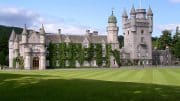
The summer of 2022 saw the Queen venture up to Scotland for her usual break at Balmoral Castle. She regarded it as an almost sacred place where the royal family could truly relax from public-facing duties. The family bought Balmoral during Queen Victoria’s reign, and it has been a private home ever since. Queen Elizabeth spent many summers here as a child, later with her growing children, grandchildren, and great-grandchildren. Indeed, it has since been confirmed that many of the family were up there with her that summer.
The last weekend of the Queen’s life saw her with some of her closest family — the Strathmores. The Strathmore family was from the Queen Mother’s side in Scotland. Rt Rev Dr Iain Greenshields remarked that “she was the life and soul of things. She was speaking very personally to me about her time there way back when she was a child; she was talking about her horses from the past, naming them from 40 years ago, people’s names and places. She was quite remarkable.”
One major event in London was the imminent change of power from Boris Johnson to Liz Truss as Prime Minister. Usually, the new PM would be driven to Buckingham Palace to be formally appointed by the monarch in the ‘Kissing of Hands’ ceremony — no actual kissing of the hands takes place; the term is a formality. This would mean the Queen, who was in incredible pain, would have to travel some 800 miles south. After many discussions between Downing Street and the Palace, they decided the incoming and outgoing PMs would have to trek north.
On Tuesday, 6 September, the handover of power from one administration was to take place in a cloudy Aberdeenshire, presided over by the Queen. There was talk of having the Prince of Wales (now King Charles) deputise for Her Majesty given how ill she was. She made it clear; it was her duty to welcome the new prime minister on her feet. Two separate flights were en route to Scotland when, in typical fashion, the weather did not cooperate. Boris Johnson’s plane landed safely around 9:30, but Liz Truss was held up by the rain.
Queen Elizabeth greeted PM Johnson, and they exchanged pleasantries. “In that audience, she had been absolutely on it. Just two days before her death (…) very bright, very focused. She was clearly not well, and I think that was the thing I found so moving (…) I just thought how incredible that her sense of duty had kept her going in the way that it had,” Boris Johnson later remarked to the BBC about the audience.
Liz Truss finally made her way through the gates of Balmoral and entered the Castle. Once inside, Truss went to “kiss [the] hands” of the Queen, a custom in which the monarch formally invites the designate to form a new government. She also later remarked how ill the Queen was and that it was truly a testament to Her Majesty’s service to the very end. One of the new Prime Minister’s first briefings was on “Operation London Bridge” — the codename for the plans surrounding the Queen’s death, updated and revised since the 1960s.
The Queen was “buzzy” after the day’s events. She spoke of the various prime ministers she had seen come and go over seventy years, never offering a political standpoint or bias for one over the other. However, the Queen did not stay long; she asked for dinner alone. It was highly unusual, even in her state of health, to be alone.
The next morning, the Queen made it clear that she wanted to remain in bed for the day. This was again highly unusual and set off internal alarms. It was clear that the Queen’s health had started to deteriorate, so much so that calls began to be made. Princess Anne was in Scotland at the time, along with some of Her Majesty’s closest staff, including her long-time dresser, companion, and friend Angela Kelly. The Princess was in constant contact with Prince Charles.
Even in bed, the Queen was still able to carry out duties, and one major event was planned for the evening. After the new prime minister was appointed, a new cabinet followed, including additions to the Privy Council. A meeting was scheduled in the evening, with a video call being arranged. Just as the meeting was to take place, with ministers lined up outside the room ready to be virtually received by the Queen, Buckingham Palace informed them that Her Majesty was unwell and could not preside. It was clear that the Queen’s health was continuing to decline.
The morning of 8 September was still and cloud-sodden. As the Castle began to wake up, there was an urgent phone call from Princess Anne to Prince Charles, who told him to come at once. There was trepidation at dropping everything and heading up to Balmoral, as doing so would immediately cause public panic. Soon after, a helicopter took off from Dumfries House en route to Balmoral, carrying Prince Charles and Camilla. They arrived a short time before 10:30 am and went to the Queen’s bedroom.
Queen Elizabeth’s equerry had also phoned Prince William to explain the situation. Prince Charles quickly followed up, telling them to come at once; he also called Prince Edward and Andrew.
As members of the royal family began to make their way northward, Buckingham Palace issued its first statement of the day. “Following further evaluation this morning, the Queen’s doctors are concerned for Her Majesty’s health and have recommended she remain under medical supervision.”
While “concerned” means light-handed talk for anyone else, for Queen Elizabeth and the Palace, it was verbiage never used before and showed the severity of the situation. For years, it was standard practice to release information about the Queen’s health only as necessary to protect her patient privacy. The statements released set off every alarm bell imaginable. While the gravity of the situation was apparent, the assumption was that the Queen had a day or two left.
Charles and Camilla left Balmoral for nearby Birkhall to contemplate what lay ahead. Anne stayed with the Queen alongside Angela Kelly and Her Majesty’s chaplain, Rev Kenneth MacKenzie — MacKenzie was reading the Holy Bible aloud. William, Edward with Sophie, and Andrew were all en route.
The Queen’s doctor, who was in residence at the Castle due to Her Majesty’s decline in health, had received an urgent call to come back to the bedroom. Princess Anne also called Prince Charles to return immediately.
It was now a question of minutes. By the time Dr Glass had reached the Queen’s bedroom, she appeared to have stopped breathing — though only a doctor could say so for sure.
Sir Edward Young waited outside. Finally, the doctor emerged to confirm the worst. He agreed a time of death with Sir Edward, who recorded the sequence of events in an internal memo for posterity. It is now lodged in the Royal Archives.
It reads: ‘Dougie [Glass] in at 3.25. Very peaceful. In her sleep. Slipped away. Old age. Death has to be registered in Scotland. Agree 3.10pm. She wouldn’t have been aware of anything. No pain.’ — Robert Hardman, Daily Mail 2024
Unfortunately, Charles had not reached the Castle in time. A phone call was made, and Sir Clive Alderton answered, with Sir Edward Young on the other end. Alderton asked Charles to pull over and handed him the phone. Young then addressed him as “Your Majesty” for the first time; Charles was now King. The entourage returned to the Castle.
At Aberdeen Airport, the RAF jet landed around 3:50 pm, carrying the other royals, who then boarded a Range Rover for the hour-long drive to Balmoral. They knew the late Queen had died.
Around 5:00 pm, the Range Rover containing William, Edward and Sophie, and Andrew sped through the gate of Balmoral. Everyone was clearly grim-faced, which signalled the news to come — government officials and foreign embassies began to be notified from 4:30 pm.
At 6:30 pm, Buckingham Palace announced the death of Queen Elizabeth II:
The Queen died peacefully at Balmoral this afternoon.
The King and The Queen Consort will remain at Balmoral this evening and will return to London tomorrow.
What followed was over 10 days of meticulous planning, mostly on Queen Elizabeth’s part, steeped in over a thousand years of tradition. Since the Queen had died in Scotland, a subversion of Operation London Bridge also came into effect — Operation Unicorn. This meant that her body would be taken to Edinburgh for a service at the Cathedral, allowing many of the public who would not have had the chance to see the happening down in London a final chance to say goodbye.
Queen Elizabeth’s coffin was flown back to London on an RAF C-17 Globemaster. Before her death, there were discussions about whether this aircraft was “suitable” for a Queen, as it was used to bring home fallen troops serving abroad. Her response? “If it’s good enough for my boys, it’s good enough for me,” according to Mike Tindall.
After a night alone for private time with family, the Queen’s coffin was taken in a solemn procession to Westminster Hall for a lying-in-state over several days, from the 14th to 19th September. Members of the late Queen’s family stood vigil at the coffin, while many members of the royal family paid their respects at Westminster Hall. The longest point in the queue to see the Queen’s remains was about 10 miles, with an estimated wait of 25 hours. An estimated 250,000 people had the opportunity to say their own final goodbye.
Queen Elizabeth’s state funeral was held at Westminster Abbey on Monday 19 September, attended by over 18 foreign royal families. The late Queen was then taken to Windsor for a more intimate committal service where the public saw the coffin lowered into the royal vault after the Imperial State Crown and Royal Sceptre were removed from atop the coffin.
Queen Elizabeth II was laid to rest with her husband, Prince Philip, who preceded her in death, in the King George VI Memorial Vault within St. George’s Chapel in Windsor. She joins her late father and mother, King George VI and Queen Elizabeth, and Princess Margaret.



Be the first to comment on "The day Queen Elizabeth II died"